Who benefits from art and artists

Early spring along the creek, watercolor painting by Inese Poga

Artists work hard

When you look at art for sale, it can seem sometimes artists are out of touch with reality and ask an unreasonably high price for their art. It seems so. I once asked a lady who had stopped by at my studio: do you know anybody who would work for about a month, every day, 6-8 hours a day and then get for all this work 200 bucks minus cost of materials? It wasn’t that I tried to make her pay more, it is how long it takes me in average to paint something. She was a nice lady, and she honestly said she didn’t know anybody who would work on such terms. I could add to this that I don’t know either, except fellow artists who for different reasons undersell their art.

Who benefits from art and artists
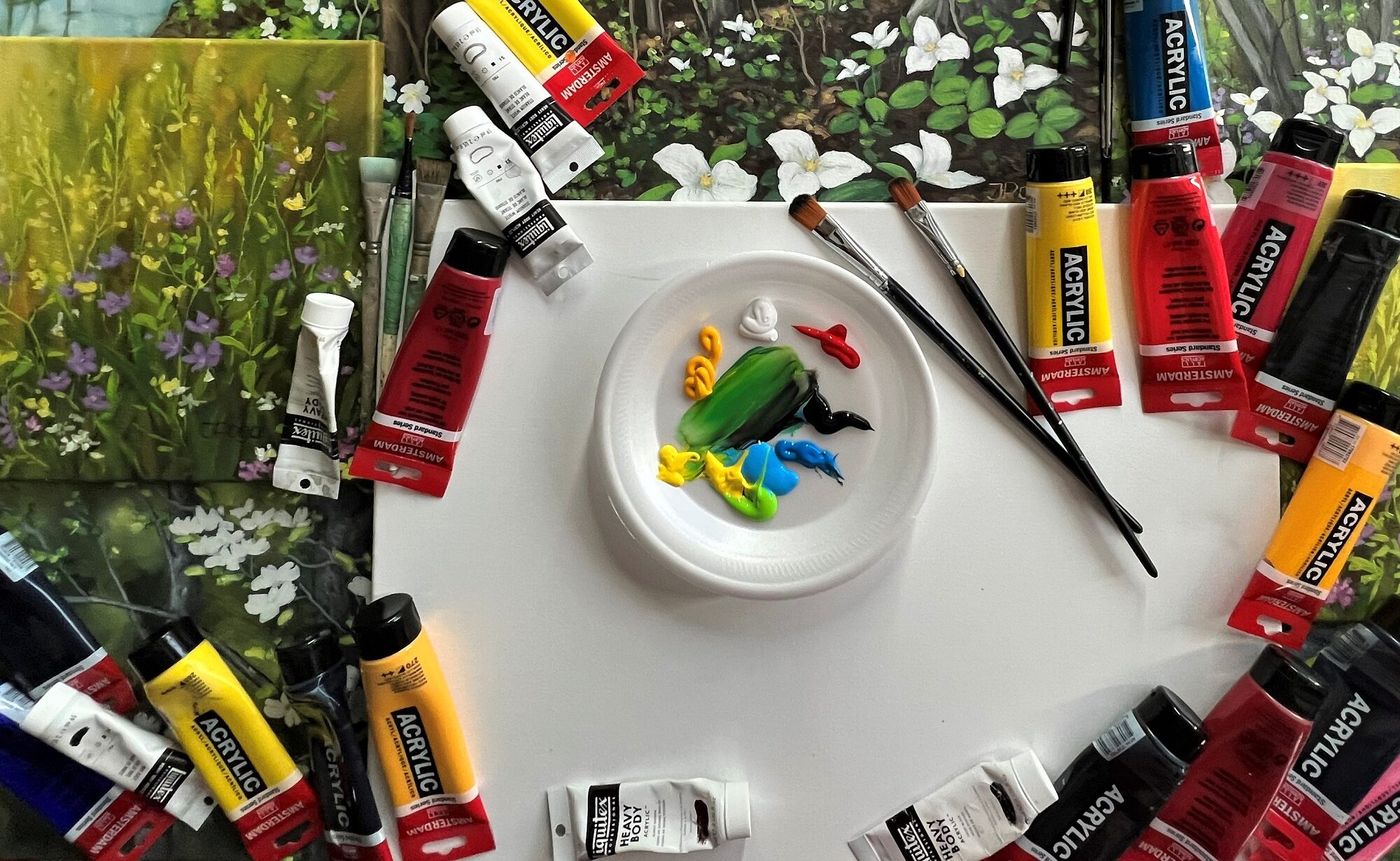
A brief list of these who benefit not only from  full-time artists, but anybody who creates art and tries to sell their art, are companies which:
make pencils, papers, tracing papers, graphite papers, drawing sketching, watercolor and all kinds of art papers,
make canvas, canvas panels, canvas boards, stretcher bars and canvas fabric,
make paints, pigments, mediums for paints, solvents, varnishes, and all kinds of chemicals that are necessary for putting paint on canvas or paper at different stages or for preserving art,
make easels, supports,  frame and framing supply manufacturers, including mats, matting paper, glass, Plexiglas and similar materials.

Let’s add website and blog
Every artists needs a website or blog, as well as social media presentation, so there are numerous platforms and hosting businesses which sell everything from security certificates to software for managing website, hosting, themes, plugins and many tools in order the website stayed functional.
We should add companies which manufacture computers, tablets, laptops, cameras, video cameras and phones since we need to get the art image captured and transferred to online space.

Virtual and real space-related cost
Space-related cost involves quite many aspects: any landlord who leases studio or showroom space;
any utility provider who sells power, gas and water to the studio;
any show, gallery, exhibition, fair, including juried shows, online competitions and online shows which charge a fee for putting the artwork out there;
any online art sales or art print sales provider which charges membership fee and commission;
money collecting and payment processing companies, banks, etc. also benefit from artists and their work.

More expenses
That is not the entire list, mind you, and to some extent it is similar to expenses that are inevitable for any freelance or self-employed person. The creation of art is definitely at the higher end of expenses in regard to costs of materials and time consumption.
Artists obviously pay for paints, paper, canvasses, frames and framing, fees for shows and gallery representation and any utilities, as well as monthly payments for studio regardless of whether there is going to be some profit or not. Even when art ends up in the wastebasket, it still involves cost.

Product and demand
I know, anybody, who creates a product, must create it first and there is never a guarantee of selling it. However, most products which are 100% unique, handmade and original sell for much more than the materials and labor that goes into them. So, we have arrived at the most important question: who enables the artist to earn living? Who makes it possible for the artist to profit from their talent, work and efforts? That is, you, dear friend who loves art. These are people who collect art.

How does an artist earn income?
The artist can only profit from his or her clients, who purchase the work whether as a product with art image on or in it, or as an original painting and drawing. Therefore, all artists are looking out for people, who love and appreciate art. People, who have enough money and are willing to spend it not on food, not on outfit, not on make-up or furniture, but art. Art is not a medication and it won’t cover you as a blanket, but it can feel that way, too. I know people, who can stand for half an hour at some of my paintings, and they feel exactly that: warmth and energy, and healing power.

Think about it
I hope when you go to an art show next time and when you look at some painting, you will be aware that along with artist’s efforts, talent, time and soul, a lot of other expenses are included. That constitutes the invisible part of a painting which is quite frequently not covered at all.

Freelancing
Being a freelance writer and artist is not easy by any means. There is huge insecurity. I never know when a new work request arrives, I cannot guess with certainty when a painting will sell. I obviously cannot work when I’m not well, and that causes other problems. The domino effect.
Why to do this? At the present moment, this is the only option I have, and I just love creating art more than anything else.

A few watercolor paintings in fresh colors

I am presenting for reference a few large watercolor paintings which come as a result of many hours of work.

Peaceful, summer lake watercolor, 20 x 16 in or 51 x 41 cm

Mirror of spring, spring reflection watercolor painting, 24 x 18 in or 61 x 46 cm

Early spring along the creek, watercolor is 24 x 20 in or 61 x 51 cm

I am not sure if I will post something else before I fly to Latvia next Monday. I unintentionally have chosen the full solar eclipse day, but who cares. I am happy to go on this trip and see my family.

Thanks for reading!

Illustration or sketch: one, two, three: ready!

Barn illustration, art classes

Illustration or sketch of building

Illustration or sketch can be simplified in order to get it done outdoors or to complete indoors because sometimes the weather can be quite bothersome and not cooperating with our intentions. I would love to share some observations because they might inspire somebody to just get a pencil, a brush and paper and go ahead.

Do we need rules in art?

It might sound strange, but most people believe there are many strict rules when we draw or paint. Maybe the instruction on some sites makes one feel that if you do not follow these rules you cannot paint or draw. That is not true.  While there are lots of tricks, shortcuts and favorite ways to get things done faster and better, one should not try to stick to something which we call strict rules. Not with creativity. Not in art.

Learn freedom from children

That would mean the small kid who does not have an idea of rules and instructions should not be able to draw. But the small kid is able to draw. Every kid is able to draw and paint. As people grow up they find out that life wants us to comply with requirements, regulations, rules and certain instructions. It’s no surprise they want to apply rules to everything what we do. I know artists who would call every step of drawing or painting a rule.

No rules, but observe principles

I would love to encourage these who want to try art, to just go with their intention. I hear quite frequently: I don’t know anything about painting or drawing. Well, you don’t have to. You just have to start trusting your eyes and trying to draw or paint whatever you intend to. We discover all main principles of art along the way. These principles are composition, color theory and mixing, values, contrast, direction of light, shadows and perspective.

What to use for watercolor sketching?

You can use for sketching everything you can afford or like. If you do not know whether you will continue or not, why would you buy watercolor brush at $75? We always use the largest watercolor brush that still allows achieving what we want. It’s pretty much common sense. You could live with just one number 10 synthetic, soft watercolor brush if it has a good fine tip. 20-brush sets from Dollarama won’t do anything, don’t go for these.

Decent watercolor paper

If you are applying wet paint on your sketch, traditional sketching paper won’t allow that. It is too thin. That’s pretty much common sense, as well. It could tolerate dry pencil or some pen, but not washes, especially repeated washes or paint lifting. I would advise to always use watercolor paper for drawing, sketch, illustration, practice, color or flow practice because it is thicker and can be made wet. If you are a beginner, you can use just beginner’s watercolor paint set.

You can do illustration or sketch any way you like

If you are afraid to draw right away with pen, do the initial drawing in pencil and go over with pen afterwards. Keep the best lines and erase everything else, and there you have a nice, clean, attractive drawing. Why to use pen? It is simply easier. Pen makes the outline clearly visible, the entire image looks finished and elaborated even when the drawing is far from perfect, but watercolor washes will bring your artistic attempt to life.

There is no wrong or right way to sketch, to draw or to paint

All artists develop their own style over time. Should you expect the first attempts to be perfect? No, don’t do that. Always tell yourself: let us see what happens. Treat all of your first year’s art as practice, as experiment. Some will be god, some will fly into the wastebasket, and that is absolutely fine.

Artistic mistakes can be interesting

People call everything which did not come out perfect: a mistake. That does not always apply to art either. Some artistic mistakes and flaws can become the foundation of your personal style. Some experiments can set the tone for anything you do in the future. Therefore: experiment, experiment and experiment!

Use any style

Illustration or sketch can be carried out in any style you prefer. Illustration can be done easily. I am advising to use pen just for simplicity and speed. It really helps. I also love the accomplished look of such sketches which can be definitely used as completely finished art on the wall or for any other purpose.

A few steps

Barn illustration, step 1, pen drawing

First we draw with pencil the main lines. We draw lightly without using pressure. After that we repeat the best lines in pen.

Step 2, adding background color

Choose whatever colors you love and would want in your sketch. Activate with water. Test on testing paper how transparent the watered down mix is. Apply small amount of water onto the main image area. You can use spray bottle if it creates mist. Check against light: if the shine is about to disappear, that’s the best time for first washes.

Illustration is ready after adding more washes with less diluted paint

Adjust and correct

If you allow first layers to dry and then make your paper wet again, nothing will happen to the first dry layers. It is safe to go over with water. Don’t rub or scratch with the brush; that will definitely take off some paint. Corrections are done with paper towel when the painting is wet: pressing paper towel onto watercolor paper will take off most of wet paint. When paper is completely dry, apply washes and use damp brush or paper towel to lift color or remove paint. Repeat until you like it.

Large 18 x 24 in or 46 x 61 cm sketch, done in a few minutes for demo

Pen and paper

The thicker the watercolor paper, the more things you can do with it. Cheap watercolor paper is for tests and practice only. It is simply too thin to do something more. You can choose any pen you can afford or like. Your pen can be different color, too. Black simply fits any other color and makes it stand out more.

All watercolor illustrations and sketches look great. If you want them to be better, practice more and don’t expect immediate perfection.

The best way to start painting with watercolors

Watercolor painting, butterflies and spring, creativity

How to start painting with watercolor

The best way to start painting with watercolor is using pen and watercolor wash. We all want our art to be great and impressive. However, if you are new to some medium or absolutely new to drawing and painting, you have to bear in mind: nothing happens right away and with the first brushstroke. I have had absolute beginners who were somewhat disappointed that their first piece of art wasn’t exhibition quality. Well, that is normal.

Patience

Every skill takes time, efforts and work. Creation of drawing or painting involves lots and lots of information. Some people are courageous by nature and love to experiment, and that is very beneficial. Some people are perfectionists and they believe everything they do must be either perfect or they are ready to give it up: don’t use this approach.

Focus on potential

My personal attitude towards something new in painting: different subject, medium, tools or technique never focuses on perfection. I focus on potential. Something might work out and something might not. There will be easy parts and probably difficult parts. That way. I call this attitude: let us see what happens. Progress is usually gradual. That is why we start with simple things and move to more complicated things.

Pen and watercolor

Pen and watercolor wash is a great technique for beginning  watercolor artists. Some like it so much that they stick to this technique and turn it into their personal style. If you are insecure about drawing lines with pen, sketch them using pencil. You can draw over with pen and delete everything else. We have now clean drawing in black ink, and the white paper is not damaged.

Any subject will do

Anything can serve as a subject: from your morning coffee cup to flowers in a vase or at the fence, from a bird at your window to sprouting vegetables in a garden. Any scene with some object is good, but flowers look extremely nice when done in pen and watercolor.

Everybody can draw

When somebody says they cannot draw, I don’t believe that. Most often that means they tried 1 or 2 drawings and these drawings were not splendid. So, they conclude that they cannot draw. Talk to me after 100 drawings. That is a decent start. It is also much easier to point out what else one should do in order to create better art when they have engaged in more than just a few attempts.

Pen and watercolor flowers and spring scenes

Pen and watercolor, Spring daffodils painting 12 x 12 in or 30.5 x 30.5 cm

Stylish and simple spring rose, all done with black pen lines and watercolor wash

Apple blooms in pen and watercolor: great starting subject

Pen and watercolor apple blossoms, the finished painting

Smiley purple pansy faces, pen and watercolor wash

Spring mood with apple blossoms, butterflies and beautiful colors

Pen and watercolor wash is easy

Why to start with pen and watercolor? It is forgiving, it is easy and fast, and it allows learning watercolor application more effortlessly. The pen lines provide additional support. It is a flattering technique since practically any painting or drawing looks good regardless of how sufficient one is with watercolor. I have done numerous pen and watercolor paintings over years, just because it is fun, it is easy and looks fantastic.

Copyright notice: Copyright of displayed paintings, drawings, images of work in progress and images of finished paintings belong to artist Inese Poga. The use of painting and drawing images is prohibited if I have not given a written permission. That includes no pinning on Pinterest.

Nothing compares to summer painting outdoors

Watercolor painting, summer watercolor

I wish summer stayed with us longer

Summer days are running away so fast that it is pretty clear: this summer is almost gone. It is certainly the best time to grab our paint box, some paper, pencil or brush and go outside. The weather isn’t too friendly in Ontario this year. I cannot recall so many heat waves and so many days without a drop of rain while I have been living in Canada. My mornings are spent at a clinic, afternoons – trying to get back in shape, but painting helps staying well.

What to start with?

When people ask me what they should start painting or drawing with, my answer is very simple: draw and paint anything around you. There is nothing better than drawing from real subjects and real places. Once you get used to it, you will notice how everything is more vibrant and more realistic when we paint from life.

Use real reference materials whenever possible

Lots of instructions start with: take a picture. I would love to say, however, do not take any pictures, but set up a still life or do a reference sketch. If it is a large work and you are afraid you’d forget the scene, you might also take a reference picture. The problem is that most people want to copy their reference photo instead of just using it. I might sound like an old vinyl, but it’s so silly to copy the photo and then pretend you painted it from scratch.

Chickadee in summer shade, watercolor, 12 x 16 inches or 30.5 x 41 cm

If you can draw, you can draw anything

The next thing which matters is this: once you learn drawing, you are able to draw anything. This happens because you have perfected your visual perception, developed eye-hand coordination and your hand starts perceiving impulses from your brain. Drawing happens as if on its own, and all we have to do is relax and observe.

The backyard, 12 x 16 inches or 30.5 x 41 cm

Create your personal color palette

Is it important to stick with colors which somebody else is using? Not at all. It is much better to explore and develop your personal color combinations. I also find that paints of different brands act very differently. My favorite watercolor paints are St. Petersburg artist grade paints. I haven’t seen any other paints which have such transparency and allow mixing colors easy. The secret is the natural and pure pigments they use as opposed to many paint manufacturers which cheat and replace pigments with fillers and binders. That means chemicals which do not enhance color or its purity.

Important art supplies

I usually use just one large round size 12-14 brush and one size 6 round brush for any up to 20 x 24 in watercolor painting. Along with paints and brushes, an extremely important part for watercolor painting is paper. When I am asking my students, why they are using this really thin and bad paper, they’d normally answer: they are just learning and it’s not worth to spend money on a good thick paper. This is a wrong assumption. Every paper acts differently. The thinner and lighter papers do not even absorb paint. It floats on the surface and creates ugly marks. It is also quite easy to lift paint, but not that easy to add more. My favorite paper is Arches. However, paint keeps traveling through layers of paper even quite a while after paint application. I am using other heavy, cold press papers also.

Blue reflexion, summer watercolor painting

Use good art supplies for practice

If you practice on a bad paper, you won’t know how much easier it is to paint on a good paper. Watercolor paper is definitely the most important part of all supplies for watercolor painting. I haven’t done much recently because I am trying to recover. It’s already a month after surgery, but it seems like I will need more time.

Support is always much appreciated

I would appreciate a purchase of any of my original paintings. After such a long period of being out of work, any support would mean a lot. I can certainly offer very good deals on originals; but prints and other products on Fine Art America site are inexpensive anyway. Since people rarely read these posts, this might go unnoticed, but anyway, I hope I can get something sold. Big thank you goes to 3 ladies, who bought 5 watercolor paintings!

My art prints and artistic products on Fine Art America:

Art collections by Inese Poga

Please accept these lovely flowers

Spring daffodils, watercolor painting, ink and watercolor painting

Flowers are nature’s mysterious beauty that is so easy to reach, to enjoy and to give as a gift.

Where do flowers come from?

From happiness.

How did they get their fragrance?

From love.

How can they be so beautiful?

God allowed them to use any color and any shape to remind us

Beauty is timeless but lasts for a short while.

I hope all moms received plenty of flowers today. They are a thing of extraordinary beauty, and they can say everything without words, just like art.

I also hope you are showing your love to your mom while there is still time enough, and you are not too late with your “I love you mom!”

It is so easy to love a small child; it takes more than superficial attraction to love genuinely very old people. To understand them and to appreciate, and to be grateful they are with us. Moms of people who belong to my generation are getting close to 90.

Thankfully, my mom is still doing lots of good things, sewing and gardening, not to mention small daily stuff like dishwashing, or cleaning. She loves flowers, so I sent her some, although, the Ocean is between us, that cannot stop us from exchanging some words on the phone or over Skype. The distance has the ability to make things clearer and more valuable. Simple words can get a new meaning.

Well, I was not very productive recently, but I have made some watercolors for cards, something unsophisticated, but sincere.

Happy Mother’s Day to every mom, grandmother and great grandmother! I hope your kids, grandchildren and great grandchildren are blessings to you.

 Please accept these lovely flowers as a small thank you for everything you are to my every single day!

Beauty never ends, flowers will live as long as we do and they will keep inspiring us. Always.